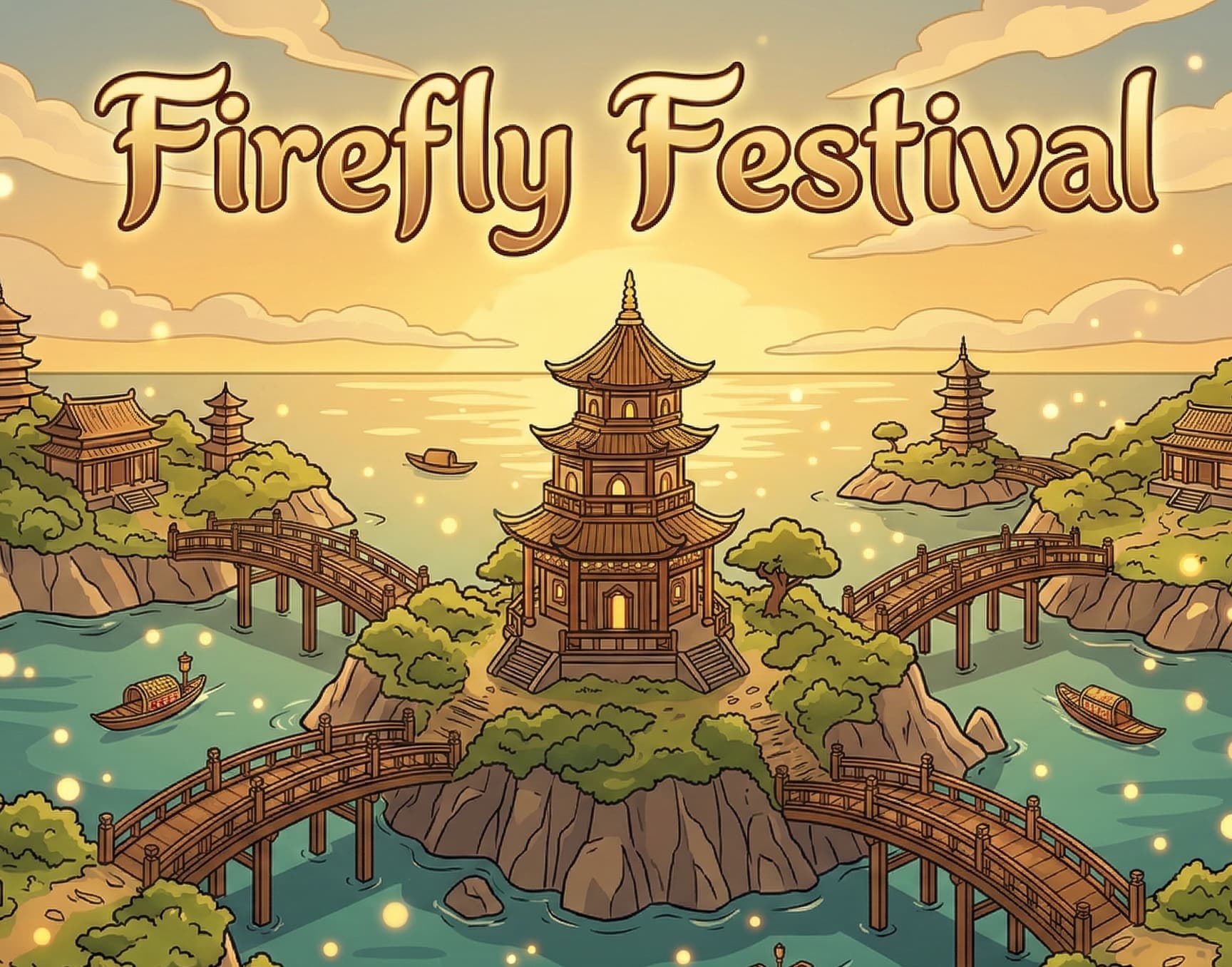
Firefly Festival
PitchingA route-building game that grows upwards as well as outwards - every tower is a promise your bridges must keep.
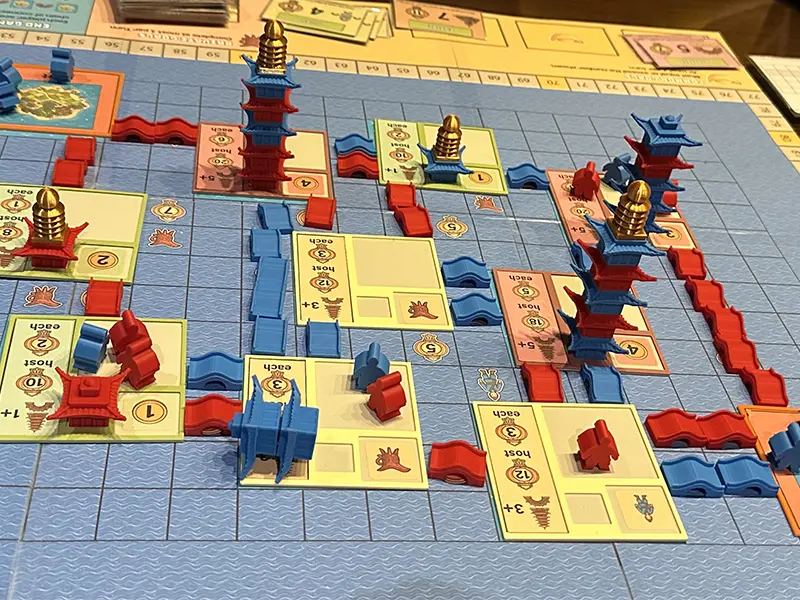
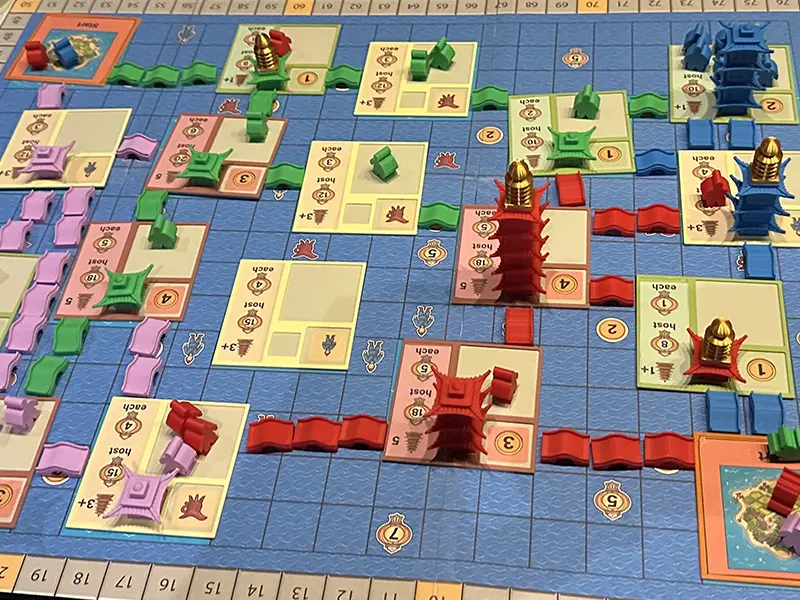
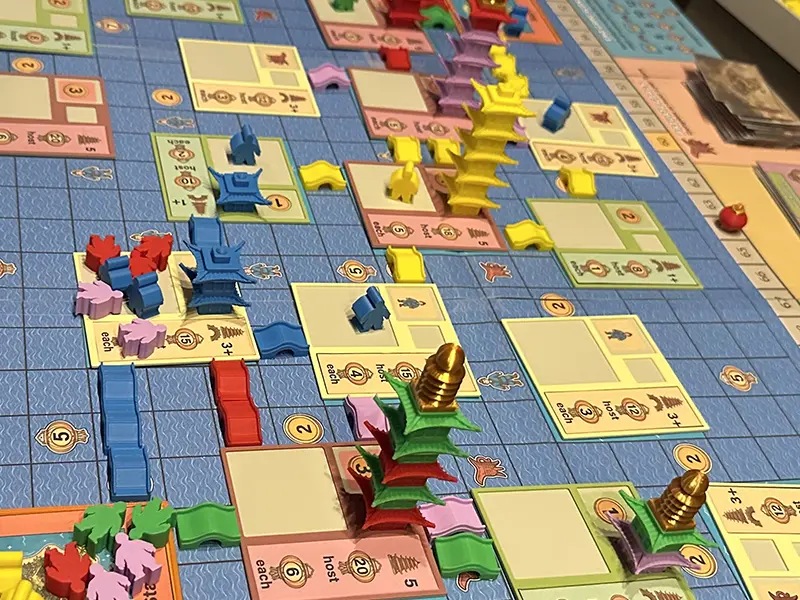
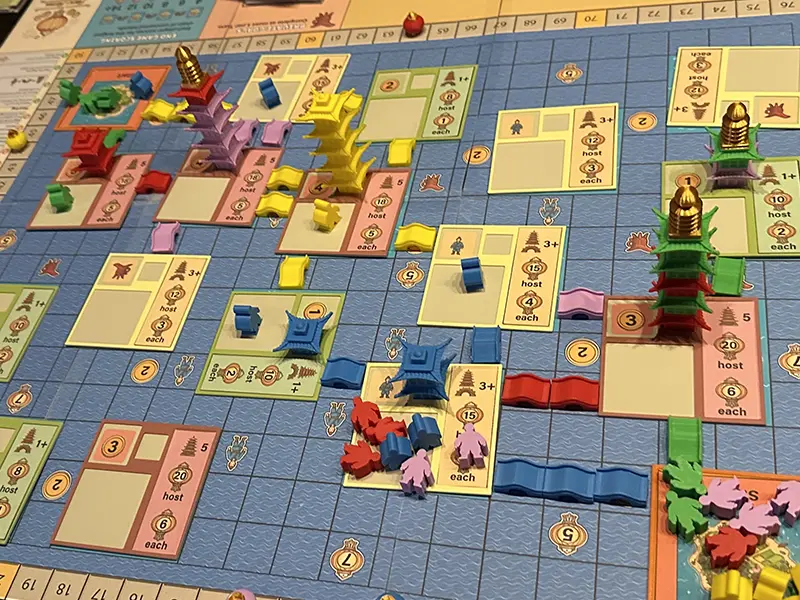
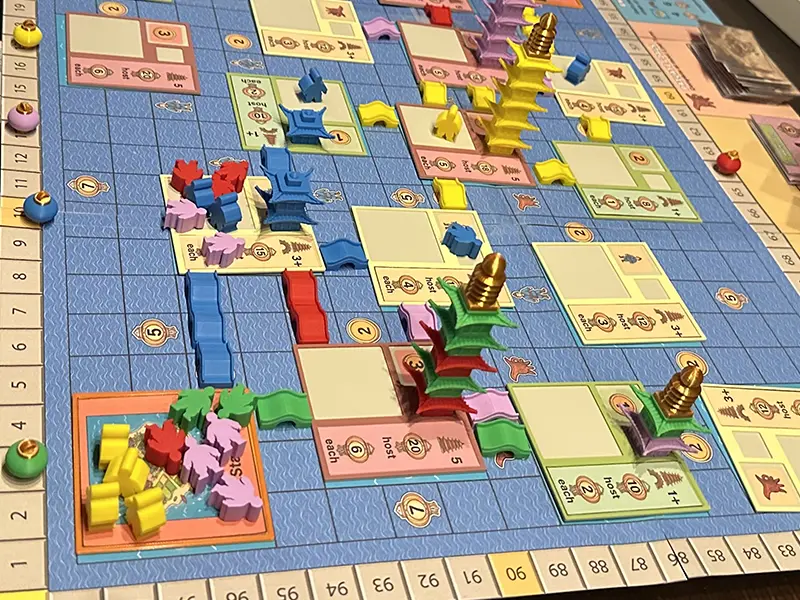
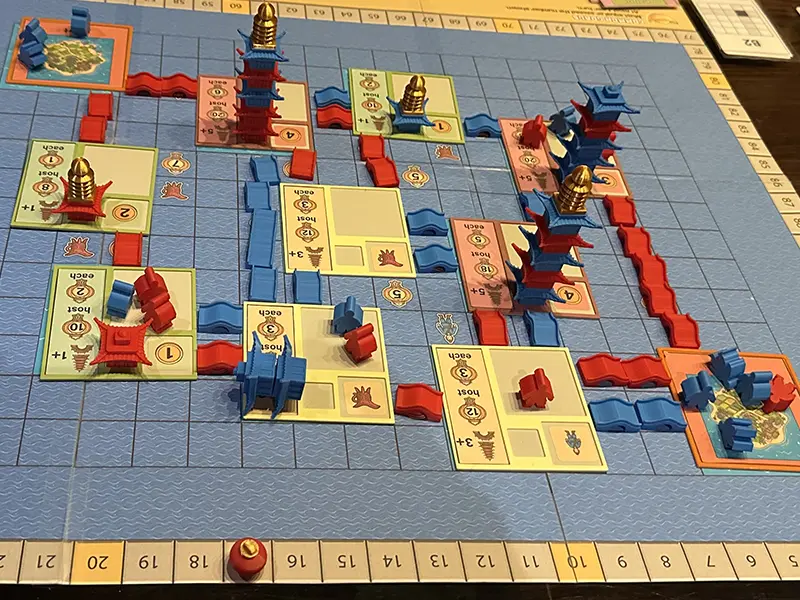
You span the water with bridges and stack the sky with pagodas. On a lantern-lit archipelago on festival night, rival festival hosts compete to throw the most spectacular celebrations - and to be standing in the right place when the fireworks fly.
The core puzzle is unlike anything else on the table: a pagoda's height determines exactly how many bridges connect to its island. Add a floor and you open new connections. Build a bridge and you close one off. That single constraint drives every decision in the game.
Each turn, choose one of four actions: build a bridge, raise a pagoda, move workers, or call a festival. You can teach it in five minutes - but you'll be thinking about the festival you didn't call for the rest of the week.
Festivals reward foresight. When you call one, every worker on connected islands scores for you - even your opponents' workers. And bridges are shared: rivals' networks extend your reach, and yours extend theirs. You're never attacking anyone, but you're always reading the board, anticipating where scoring will erupt, and arriving before the fireworks do. Interactive without being combative, opportunistic without being mean.
If you've played Ticket to Ride or Through the Desert, you'll recognise the DNA - simple turns, a shared map, and every placement rippling out to everyone else. Variable goals and a randomised archipelago reshape the puzzle every game, and thirty unique character cards mean no two games play alike.
And the table presence is the strategy: by mid-game the table is a skyline of tiered pagodas and bridge chains - stackable 3D towers with gold sōrin finials - and none of it is set dressing, because a tower's height is live game information. 2–4 players in under 60 minutes, up to 6 with extra pieces at about 15 minutes per player. The kind of game people are still talking about on the drive home.